Two Souls

Zwei Seelen wohnen, ach! in meiner Brust   (Two souls live within me)

Die eine will sich von der andern trennen  ( Each trying to pull away from the other)      Johann Wolfgang von Goethe Faust (1808)


Will the real Gustave Flaubert please stand up.

Flaubert 1

“Me and my books, in the same apartment; like a gherkin in its vinegar”

“I have always tried to live in an ivory tower”

“I am a bear and I want to stay a bear in my den, in my lair, in my skin, in my old bear’s skin”

When asked why he had been cruel to a woman at a party, Flaubert said “because she might want to come into my study”

Flaubert 2

a)  Flaubert and his friend Maxime du Camp spent the summer of 1847 on a tour of northern France. Having travelled to Blois by train they spent the next 13 weeks – mostly on foot – following the river Loire to the sea, then taking the coastal route round the whole of Brittany – a distance difficult to calculate precisely but definitely somewhere between 500 and 1000 miles.I repeat – mostly on foot. Sometimes sleeping rough, navigating difficult terrain, visiting towns, inns, ruined castles, a fair, a slaughterhouse, an island, Chateaubriand’s tomb.

b)  In 1849 Flaubert and du Camp began another journey, a journey which made the previous one seem like a walk in the park. They were away for two years. First they travelled by coach, rail and boat to the South of France. From Marseilles they sailed to Alexandria via Malta. In Egypt they went to Cairo. They left Cairo on horseback, rode for 4 hours across the desert to the Sphynx. They camped at the base of the Pyramids. At 5 o’clock the next morning they climbed to the top of the Great Pyramid to view the sunrise. The following month Flaubert and du Camp began a 17-week journey along the river Nile, taking in the ruins of Thebes, then on to Luxor and Aswan.One night they camped by the tomb of Ozymandias in the Valley of the Kings. At the southernmost point of this expedition, Flaubert bathed in the Red Sea. Beirut followed, then Jerusalem. They journeyed to Damascus along the valley of the Jordan. On and on they went – Tripoli, the island of Rhodes, Ephesus, Smyrna and Constantinople. One day Flaubert rode 15 leagues across the great plains on the Asian side of the Bosphorus. Next came Athens and the Acropolis, then Thermopylae and Sparta. They crossed swollen rivers on horseback to reach Missolonghi, the place of Byron’s death. Up through Italy they went – Herculaneum (he climbed Vesuvius), Naples and Rome. The final leg took in Florence, Venice, Milan, Cologne and Brussels.

Which is the real Flaubert – Flaubert 1 or Flaubert 2? Obviously, both. We all recognise the ambivalence in human nature. Two souls, in the words of Goethe. But what is astounding is the extreme polarisation of Flaubert’s two sides.After the two-year Egyptian trip Flaubert 1 took over. He spent around 3 months at home, day after day, week after week,in his study. No half measures. It seems that he was either in hermit mode or in adventure mode. The two modes were linked though. One fed the other.Both at home and away, whether contemplating what he saw or writing his thoughts, Flaubert was exercising his impressive imagination and creative powers. In adventure mode he assimilated and processed his experience; in hermit mode he channelled the result into his writing.

Precisely what happened was that Flaubert conceived the novel Madame Bovary in Brittany, developed it in his head in Egypt and wrote it in his study when he returned.In Brittany Flaubert took mental and actual notes regarding provincial France. He met prototypes for M Homais and Charles Bovary. His experience of a local fair on the journey became one of the most famous scenes in the novel. Flaubert saw these people and events with amusement and contempt. In his study he transformed this attitude to life into a new, ironic style.Egypt confirmed his nostalgia for a lost Romantic world which only heightened his jaundiced view of contemporary France. Maxime du Camp recounts witnessing the moment in Egypt when Flaubert hit upon his heroine’s name. “Eureka, I have it. I’ll call her Emma Bovary!” This may well be apocryphal but at the very least it is evidence of the way the novel was created on the road in Flaubert’s head.

It has been said that “the unexamined life is not worth living”. Flaubert examined everything. He processed all of his experience. He fed it into his imagination which then informed his writing. In a sense then, the two modes were not distinct entities; they were part of the same process. Without either of them Flaubert would not have been the writer he was. Without the Romantically-inspired, carefree, reckless experiences stored by Flaubert the adventurer, the sober, disciplined, hermit-like, industrious Flaubert would have been short of material.

The Albatross

chatterton

 Ce voyageur ailé, comme il est gauche et veule          

Lui, naguere si beau, qu’il est comique et laid .

 Exilé sur le sol au milieu des huées,                                                                                                                                  

Ses ailes de géant l’empeche de marcher  

 (How ungainly and contemptible the winged traveller becomes    

How laughable and graceless, he who only a moment ago was so full of beauty

Exiled on earth, an object of scorn,

His giant wings impede him as he walks)                                                                                            

 L’Albatros Charles Baudelaire  Les Fleurs du Mal   first publ. 1857

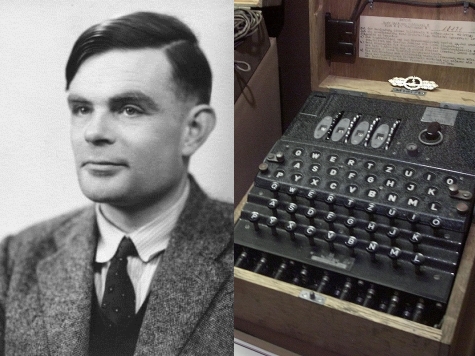
Alan Turing, gifted mathematician and inventor of a prototype computer, was instrumental in breaking the German Enigma code during the Second World War. It is believed his work at Bletchley Park shortened the war by at least two years. After the war his work went unrecognised because of the Official Secrets Act. Turing was homosexual, was pursued by the police, convicted of gross indecency in 1952 and was given the choice of a prison sentence or chemical castration. He chose the latter. He committed suicide two years later.

Yesterday I saw the film “The Imitation Game” which tells his story. It’s a moving film – how could it fail to be – and Benedict Cumberbatch gives a powerful performance as Turing. Some critics have noted the formulaic nature of the film.One stated ” Somehow …with its cookie-cutter screen-writing and lacquered, nominate-me-for-everything sheen, (it) manages to feel like a series of stories we’ve heard before, following the familiar contours of other films.” I agree , but what is not made clear is where the formula comes from and why it falls short.

The formula has its roots in literary history. The story of the tragic genius is part of the Romantic tradition. The trajectory of this story is familiar because it has remained unchanged for nearly 200 years. In this tradition the Genius inhabits a world set apart from mere mortals and in achieving greatness suffers ridicule and rejection from the common crowd. This is a fate incumbent on him. Several times in the film Turing is told “no normal person could do such great things”  to help him accept his suffering.We see him bullied and beaten at school for his cleverness. We are shown that his success in his work is a direct result of his awkwardness in the company of others and the resulting isolation.

The Romantic tradition grew out of a fundamental shift in thought, a new belief in the authenticity and primacy of an individual’s  view of the world and the uniqueness of each person’s feelings. The artist/genius was seen as a special case, someone who leads the way in this new belief, someone who is prepared, martyr-like, to expose his feelings to the public, so risking ridicule and scorn.It is hard now to appreciate the impact of this new expressive art, since it is what we have come to expect. The impact was enormous. Jean-Jacques Rousseau published one of the first Romantic novels, “La Nouvelle Héloise” , in 1761. Its forefronting of a painful emotional life caused a sensation. By the end of the century it had gone through more than 70 editions. Rousseau became famous and was inundated with fan mail. Tragic Romantic heroes became fashionable from then on. In 1774 Goethe published “The sufferings of Young Werther” in which a man’s frustrated passion drives him to suicide. The ultimate artist-as-suffering-hero at the beginning of the 19th century was Beethoven. He once wrote that only his art, and the need to express everything inside him, had prevented him from taking his own life. He became a legend in his own lifetime as much for his personal image as for his music, due to the knowledge the public had of his deafness and his solitary and withdrawn life.

Eventually, as in “The Imitation Game”, artists’ lives began to be re-evaluated in light of the new Romantic tradition. So the poet Thomas Chatterton, pictured at the head of this piece, who had taken his own life at the age of 17 in 1770, was rediscovered by the Romantics at the beginning of the 19th century. John Keats wrote an Ode in which Chatterton, like Turing, is seen through the prism of Romanticism:-

  “O Chatterton! how very sad thy fate.  Dear child of sorrow – son of misery!                                                                              How soon the film of death obscured that eye, Whence Genius mildly flash’d, and high debate”  

We still live in the Romantic era. That’s why films can appropriate Romantic ideas. In fact we believe more and more in the primacy of the individual. In our self-obsessed, media-driven technologically advanced times, confident and sure of our modernity, it is perhaps surprising to read the opening lines of Rousseau’s “Confessions” of 1782 which set us off down the Romantic path:-

“I have resolved on an enterprise which has no precedent, and which, once complete, will have no imitator. My purpose is to display to my kind a portrait in every way true to nature, and the man I shall portray will be myself. Simply myself. I know my own heart and understand my fellow man. But I am made unlike any one I have ever met; I will even venture to say that I am like no one in the whole world. I may be no better, but at least I am different.”

Revolutionary then, now simply the assumption driving social media.

The problem with The Imitation Game”, as I see it, is that it puts dialogue inspired by the Romantic tradition into a contemporary setting. The Romantic tradition has not dated as much as Romantic language has. In the film this language is not fit for purpose and so some of the dialogue sounds, for want of a better word, clunky.

Poetry does it better. If you want a fitting memorial to Alan Turing you could do worse than read Charles Baudelaire’s “The Albatross”, quoted at the head of this blog. Romantic thought is better suited to metaphor, to abstract, transcendental truth. You don’t need to write about Alan Turing to express the tragedy of his life. A metaphor which stands for all such lives is powerful enough. Baudelaire, although normally seen as a precursor to symbolist and modernist art, had his roots in the Romantic tradition. In his poem, the fate of the albatross is compared to that of the poet/genius. In the air the graceful bird wanders as free as the poet’s imagination. When caught by sailors and trapped on board ship it staggers clumsily and is subject to the sailors’ mockery. And here is the point – explaining the poem, or translating it, as I did at the start of this piece, makes the same mistake as the film. The metaphor is enough. It carries the poem and its meaning by itself. It is moving without the need for explanation.That’s what poetry does – it moves us without recourse to clumsy literalness. Indeed, poetry is the albatross. Left to soar and roam in the imagination it is a thing of beauty. Brought down to earth by explanation it limps and stumbles. Furthermore, because of the nature of the industry, a film can be like an albatross designed by committee. It may be composed of many admirable working parts, but it doesn’t get off the ground. It is too heavy to fly.

Alan_Turing_Machine     fleursdumal

Flaubert’s Genius

  “He fell to the ground. He was dead. Thirty-six hours later, at the apothecary’s request,                                                               Monsieur Canivet arrived. He opened him up and found nothing.”

Why is Gustave Flaubert considered to be a great novelist? After all he only produced a handful of novels, and only one – Madame Bovary – is commonly thought to be amongst the best. Charles Dickens wrote 15 novels many of which are still popular today. And look at the quotation at the top of the page. It comes from the final page of Madame Bovary and reports the death of Emma’s husband Charles. These lines were written by an author who took such pains over his writing that even when working flat-out he produced a mere 500 words a week. And that’s what he came up with to conclude his book? Six or seven brief, bare phrases? Imagine how many words Balzac would have taken to cover the same event. Or should I say pages. Imagine the soaring, ringing language Hugo would have deployed. Just what was Flaubert doing hour after hour in his writer’s study to produce such meagre text?

What he was doing was creating a ground-breaking, original style of writing, a style which influenced all novelists after him and which still persists today. He agonised over it. He only mastered it around three months into the writing of Madame Bovary. It required the removal of many things which had previously been considered part of, or even essential to, the writer’s tools of the trade. Flaubert tells us he was aiming for ” No lyricism, no digressions, personality of author absent”

The secret to this new style was irony. We understand what is not said. Removing overt references to the author’s opinion forces us to read between the lines. After the glories of the Revolution and the grand flourishes of Romantic writing a new sensibility was winning the day, a more cynical one, one that was more receptive to ironic comment. Readers would smile and nod at the idea that the doctor found nothing inside Charles Bovary. They would be laughing at the limitations of provincial medicine and at the empty hollowness of the bourgeois world exemplified by Charles.

Flaubert invented the cool, detached, impersonal, ironic style of writing which became standard modern prose and which is still an option for writers today. He didn’t leave a huge body of work but his legacy changed the way we see the world. Not many words, then, but every word counted.

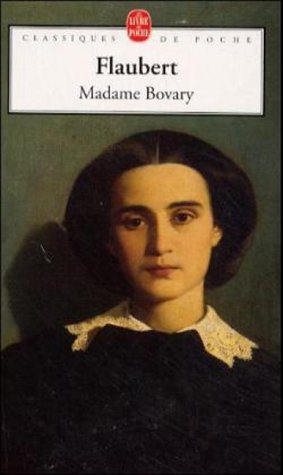
madame-bovary-535994      Gustave-Flaubert2

Faulks and Robb

In the last few months I have read two books which at first sight would seem to have little in common. They are Sebastian Faulks’ “Faulks on Fiction” and Graham Robb’s “Parisians”. Faulks’ book is literary criticism. It analyses some of the most famous characters in British novels – Robinson Crusoe, Tom Jones, Heathcliffe etc. Robb’s work, however, is concerned with real people. His accounts of incidents in the lives of certain Parisians, researched from historical documents of the last 150 years, form an unusual view of the history of Paris.
The effect of reading them, however, is strangely similar. In a sense they are dealing with two sides of the same coin. Faulks wants us to see that in the best novels fictional characters have a life of their own. These characters are drawn so vividly that they are like real people. And they are like a historical document in that they give a picture of what it is to be British. Robb takes his historical documents and brings them to life by giving them a novelist’s treatment. His imagination fills out the historical facts with psychological and emotional detail. In both books therefore we are reading about characters who are a mix of the real and the fictional. Faulks takes fictional characters and shows how real life informs them and gives them meaning. Robb takes people from reality and gives their lives meaning through the techniques normally associated with fiction. Both approaches are valid . In effect they remind us of the way we live our lives. Real life is not distinct from the imagined life. Reality is informed by our feelings, thoughts and senses. That is why my world is different from your world. Reality is just as much fiction as fact.

napoleon_bonaparte14     heathcliff

George Shaw – “The Sly and Unseen Day”

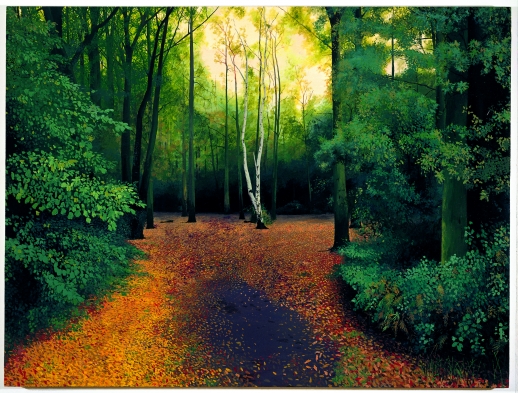
I went to see the George Shaw exhibition at the Baltic in Gateshead three times in 2011 and then attended a talk he gave at the same venue. His paintings are interesting on many different levels. They deal with universal concerns – memory, time passing – and yet are rooted in a very specific, everyday subject matter. He paints from photographs he has taken of the estate where he grew up – Tile Hill – on the outskirts of Coventry.Tile Hill is one of the many modern estates built in the 1960s to replace the kind of terraced streets I was born in. They were conceived after the Second World War in the spirit of Modernist town planning as an optimistic commitment to a better future. Having left home for higher education, Shaw eventually returned to photograph and paint the streets and woodland paths of his youth. The effect is strangely moving. What you see is a place which is growing old, being reclaimed by the natural world it was placed in. There is an air of death and decay. In a way you feel sorry for the place as you would for an ageing relative. In fact what you are feeling sorry for is yourself, your lost youth, the passing of time, the approach of death. The title of the exhibition supports this feeling. “The sly and unseen day” is a quote from Hardy and refers to the day of your death. The estate is a poignant metaphor for a person’s life. Like us, these estates were conceived in a spirit of hope and started life fresh, bright-eyed, looking to the future, but in old age we might ask what did we achieve, did we really fulfill those dreams? Places have a shelf-life just like us. The streets of my youth are no longer there.The history of Utopian planning schemes goes back a long way. Near where I lived in the centre of Leeds was Quarry Hill a large block of flats built in the 1930’s to great acclaim as self-contained urban environment. That too was demolished many years ago.
Shaw’s work also relates to themes found in the wider artistic world of literature. When talking about his paintings Shaw refers to Elliott, Larkin, Hardy etc. The titles of his works have a literary air about them. So I don’t think it is too far-fetched to see links in his work with writers’ themes – even if they were not specifically intended. A comparison with Proust for example seems apt. It isn’t just because Proust’s subject matter was the process of remembering the past. There is a more specific link than that. Proust saw his chilhood in terms of the paths around his childhood home. In fact he names each of his novels after one of these pathways – Swann’s Way, Guermantes Way etc – each of them leading to a different part of his memory. Shaw’s paintings show many routes round his home – steps. underpasses, gaps through hedges, actual paths through woodland. He uses them the same way Proust did – remembering those paths brings the past to life.
Finally the images themselves are striking, beautiful even. Unusually they are painted using enamel paint as bought in a hardware shop. They are at times almost photo-realist but have a an ethereal quality about them. The paint has a solidity and a sheen which seems both real and suggestive. The literary connection which comes to my mind is again French. Baudelaire was one of the first artists to describe the urban world , giving it the same respect as the natural one. He saw meaning and beauty in the everday. He called his works ” Les fleurs du mal” and any one since who sees truth and beauty in concrete,iron and tarmac owes a debt to the poet who believed that what most people reject as ugly can produce “flowers”.
The post-show talk with Shaw was not long enough. In fact only three questions were taken from the audience. This was a shame. The reason why Shaw’s exhibition has impressed me so much is that it opens up so many thoughts and questions which I can relate to. It came just at the the time when I was looking back at the Leeds I barely knew as a child and at an age when you can’t fail to think at times of “The sly and unseen day”.

shaw1georgeshaw3slyandunseen

Sillitoe’s Sisyphus

Alan Sillitoe, the author of “Saturday Night and Sunday Morning”” and “The Loneliness of the Long Distance Runner”, died in 2010. I read both those books last year. Before I read them I used to say, at the risk of sounding pretentious again, that my favourite writer was Albert Camus. Sillitoe now runs him a close second. And not surprisingly, because there is a connection between the two.
Camus wrote two books about condemned characters who refused to toe the line – one fictional, one mythological. In L’Etranger the central character, Meursault, is condemned to death at his trial for murder, ultimately not because of his guilt but because he refuses to appease the jury by pretending to be who he is not. “The myth of Sisyphus” is Camus’ take on the Greek myth in which Sisyphus is condemned by the Gods to an eternity of daily pushing a boulder uphill only to watch it roll back down each evening. Camus transformed the myth into one of the most influential metaphors of 20th century literature. One that clearly meant a lot to Alan Sillitoe.
Camus” version of the myth, like much of French Existentialist thought, was born out of the German Occupation of France in the 1940s. How do you live when there’s no escape? How can you be yourself? Do you have no option but to collaborate, and so live a lie? Or is it possible to find a way of rebelling, secretly resisting . Camus, Sartre and others saw this as a model for the answer to a wider, deeper problem in modern life. How do people who are godless non-believers live in a world which judges everyone as if the only way to live is as a believer. Do you pretend to believe? No, like Meursault, you accept the consequences for living out life as you see it. In the same way Camus shows Sisiphus accepting his fate positively. Camus tells us “We must believe Sisyphus was happy”, happy in accepting who he was.
Sillitoe was a Socialist, who saw that working-class people in 1950’s Britain faced a similar problem. Their lives were controlled by an Establishment who denied them any economic freedom but expected them to live by the rules of an alien upper-class culture. New freedoms of thought were appearing but still ordinary people were expected to live by an ageing fixed moral code. Arthur Seaton in “Saturday Night and Sunday Morning” is an updated Sisyphus, like many others pushing his rock uphill in the daily grind of factory life, but refusing to be cowed by authority. He lives by his own morality, shocking though it is to his peers. In fact he flaunts it in the faces of those who would judge him. Sisyphus would surely agree with his credo “Don’t let the bastards grind you down”
The hero of “The Loneliness of the Long Distance Runner” is even closer to the Sisyphus model. Locked up in a remand prison he fills his days with the same cross-country run, but like Sisyphus he finds solace in it. He cannot physically escape but he finds freedom in his running. And he refuses to collaborate. Coerced into running competitively for the glory of the prison governor, he privately rebels and throws the race in the finishing straight. He finds freedom and happiness in running for himself.
Sisiphus was everywhere in the 1950s and 60s. He sometimes went by the name of “angry young man” or “rebel without a cause”. He was important to me without me knowing it. Camus view of Sisyphus contains most of what young people then believed in. Sillitoe was ahead of the crowd though. That’s why his books are my new second favourites

sillitoe  MythOfSisyphus  Sisyphus

Cormac McCarthy

About two years ago I read most of Cormac McCarthy’s novels and found them very moving. In a sense you  feel that they all could be titled “No Country for Old Men” in that they depict an America which no longer exists. Characters in McCarthy’s books own little but seem to have more than us. What they have is the whole world. They live on the edge of death at every moment but, on horseback, are free to wander wherever they wish in a world to which they feel connected. The central metaphor is the road, the trail, the journey through this natural  world, a pilgrim’s progress of the South Western States.
I have just started to re-read the Border Trilogy and have completed “All the Pretty Horses”, the first of the three. Because I know the stories, what strikes me this time is McCarthy’s wonderful prose style. I realise now that it is just as much this style which grips you and carries you forward as the events of the books. The metaphor which comes to mind here is not so much a road but a river, a river of words. It has been commented before that McCarthy’s style owes something to the bible with its long strings of phrases which flow rhythmically on and on linked by a succession of “and”s.As you read you feel like a leaf being gently swept down a stream falling down a hillside. The meaning of the words is almost irrelevant..You trust the current as you float from one eddy to the next. Each phrase seems to bump up against an “and” and then twists and turns again downstream. It is mesmerising and strangely comforting. You feel cosseted, and though you have a sense of meandering you are secure in the feeling that you are heading somewhere, and when you reach the end of the paragraph it is like landing in the rock pool you always knew was there. I sometimes find myself re-reading such a paragraph, just so I can jump in once more at the top and, Disneyland-style, do the ride again.

cormac-mccarthy-all-pretty