First World War Postcards

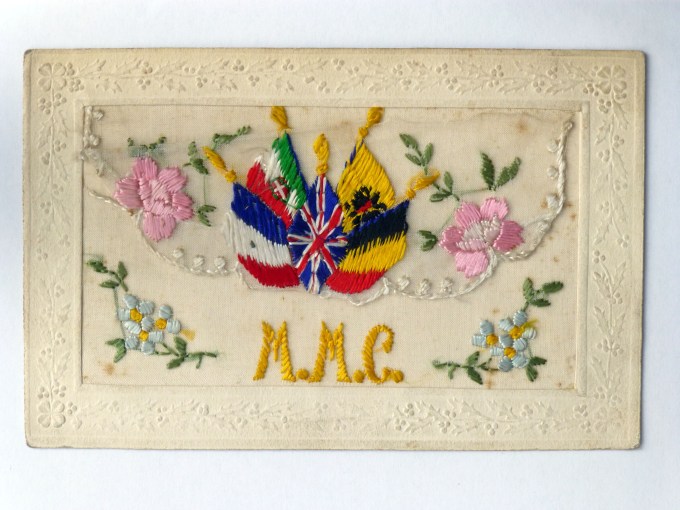
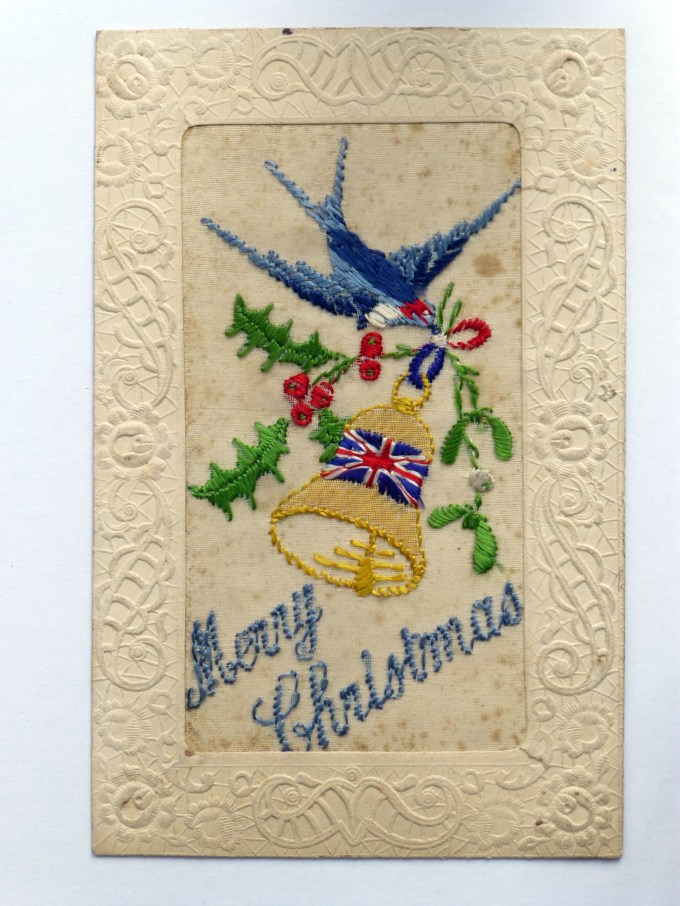
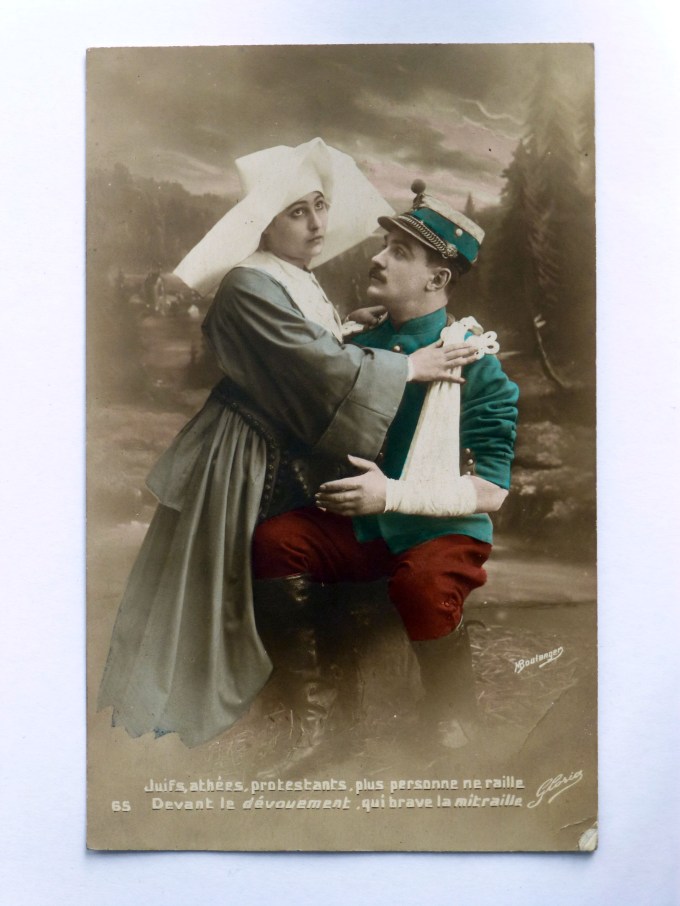
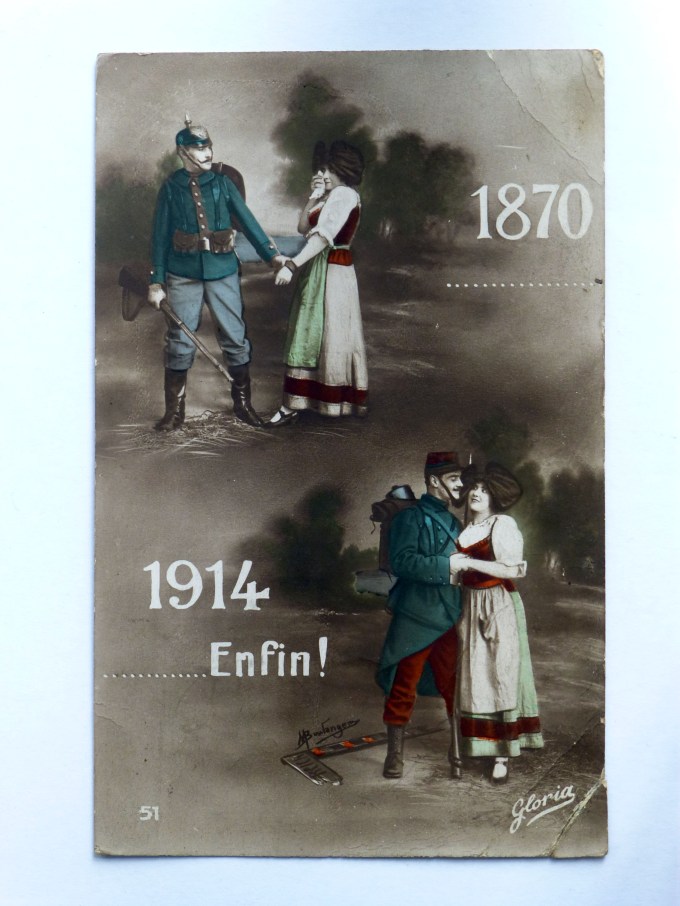
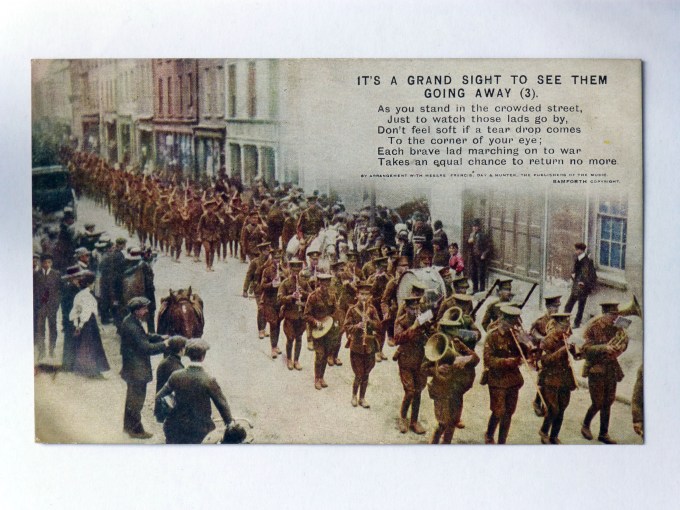
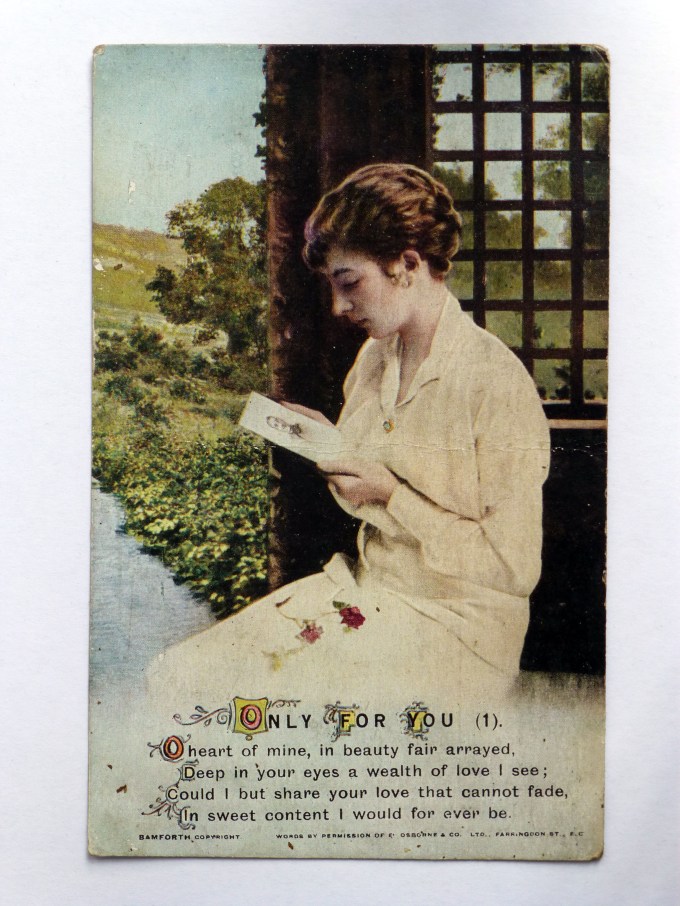
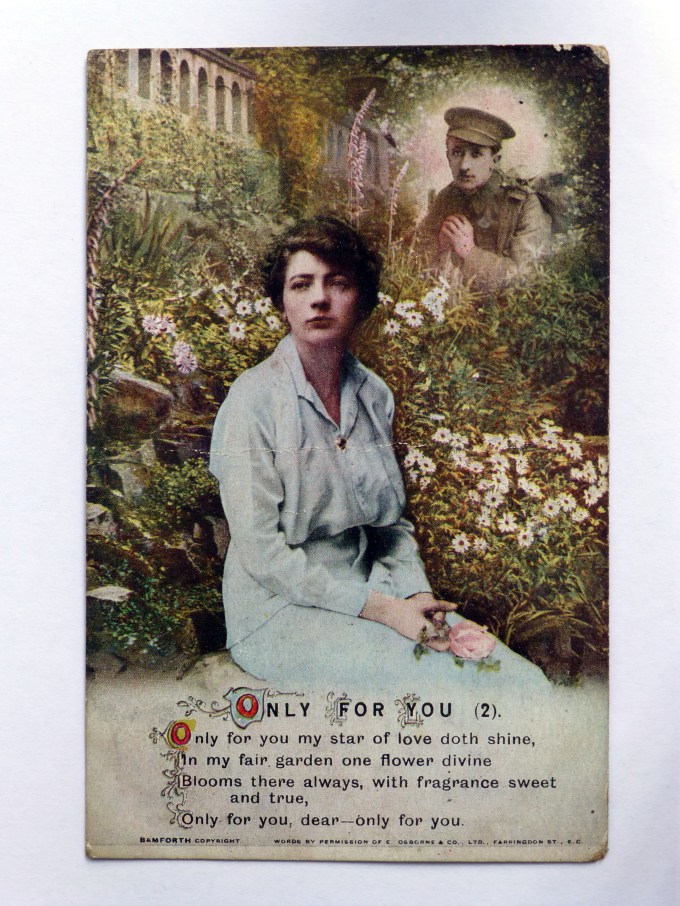
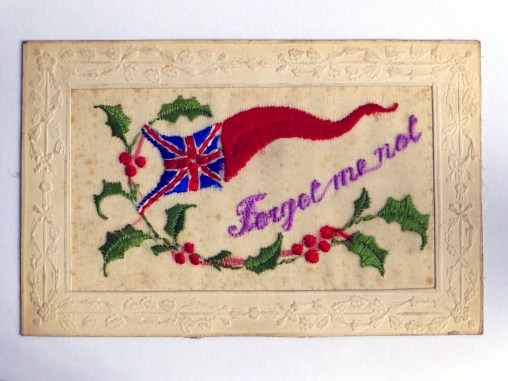
This is a selection of the postcards collected by my grandmother during the first world war.

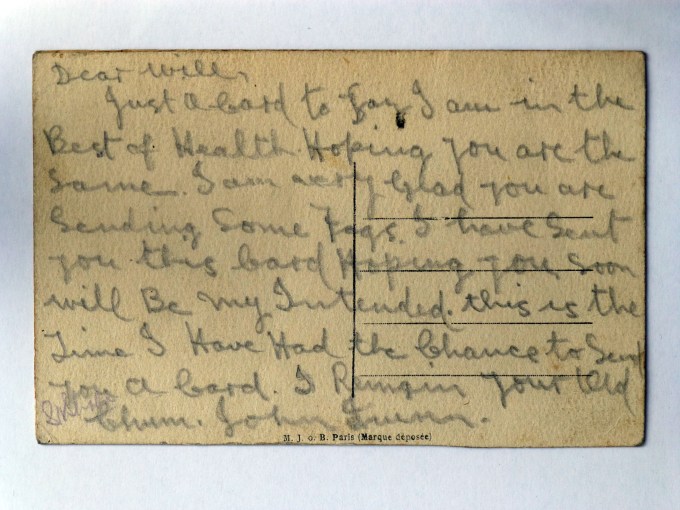
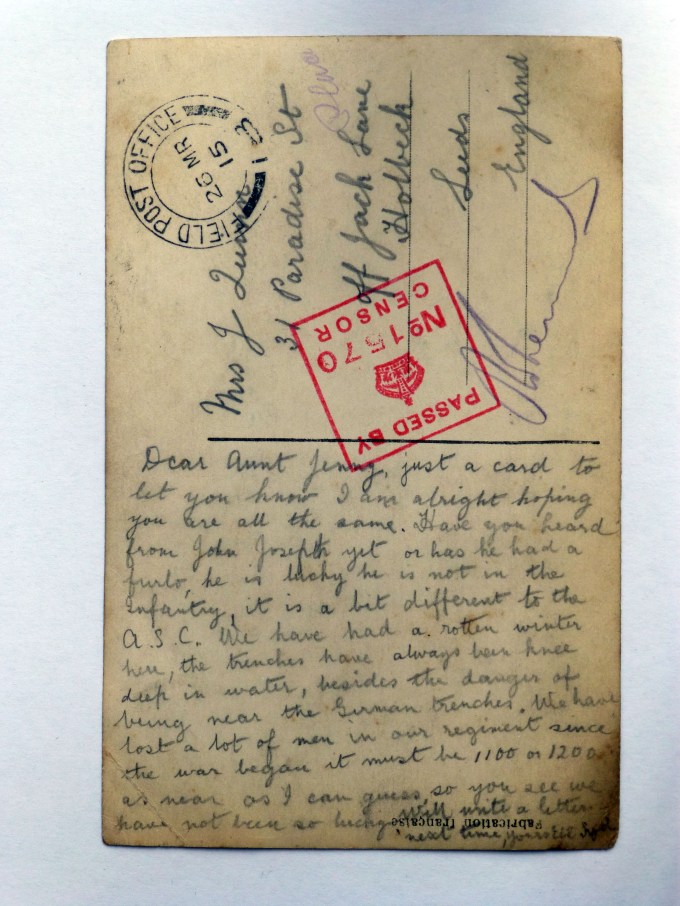
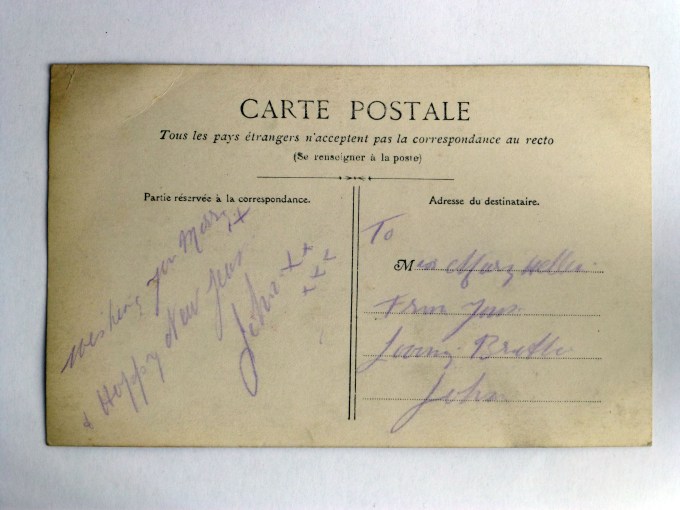
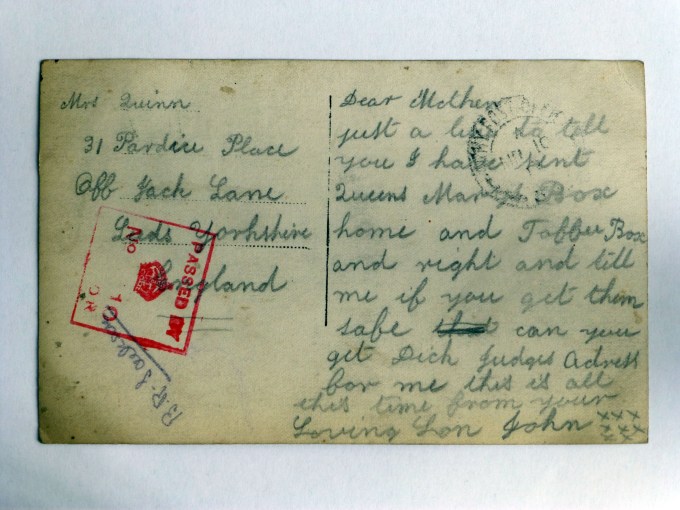
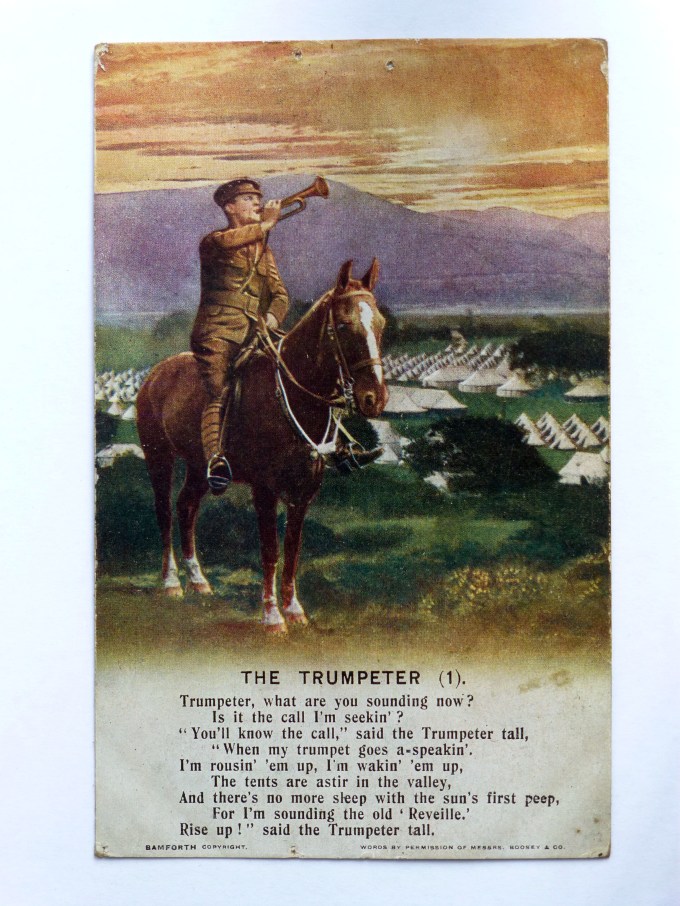
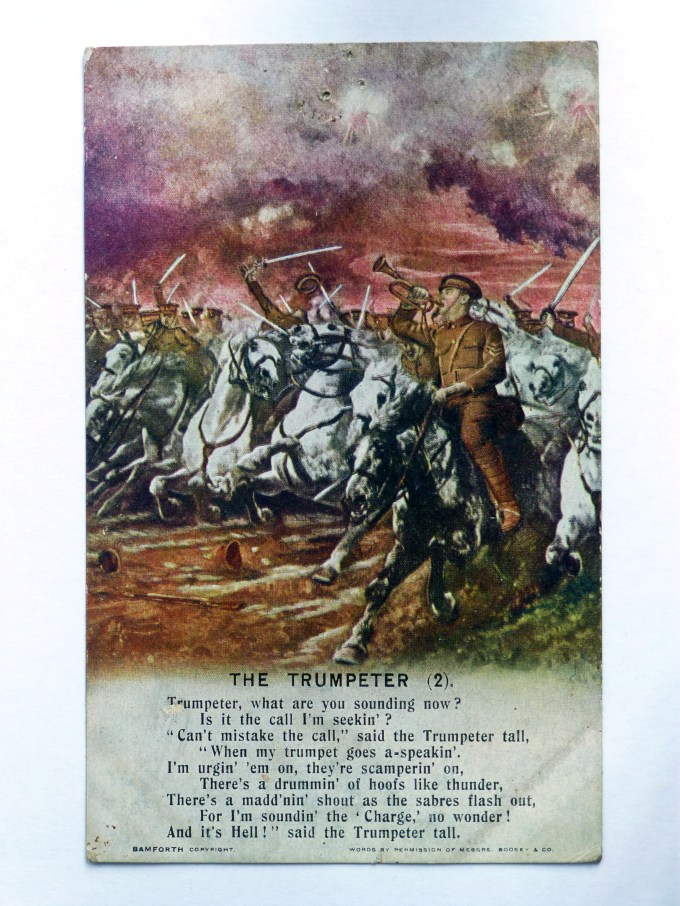
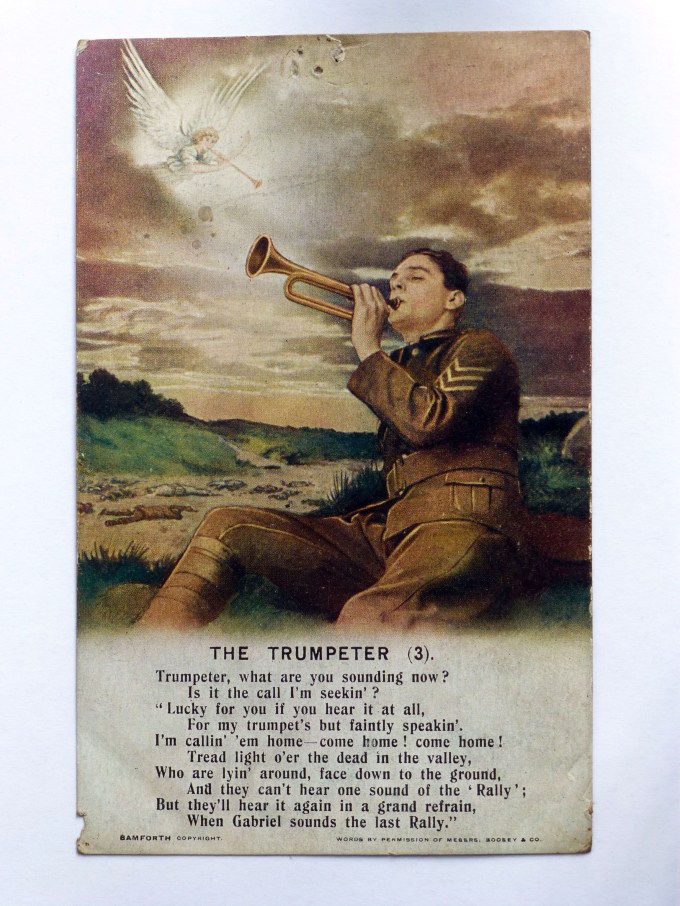
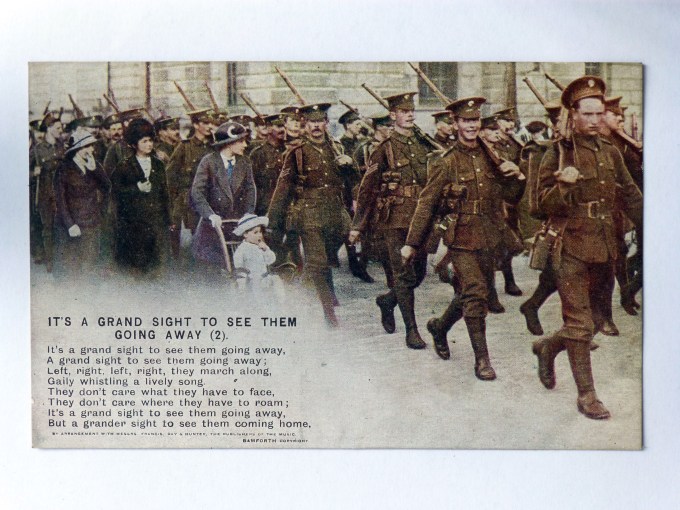
Some were sent by her brother from the front in France. Where possible I have shown the reverse side with the written message. Others are French postcards of the time or cards in series showing verses from songs or poems.

1914-15forgetmenotgrandsightheadbayonetteP1000606XP1000607XP1000608XP1000609XP1000610XP1000611XP1000613XP1000614XP1000615XP1000616XP1000617XP1000618XP1000619XP1000620XP1000621XP1000625XP1000626XP1000627XP1000628XP1000629XP1000630XP1000631XP1000632P1000633XP1000634XP1000635XP1000636XP1000637XP1000638XP1000639X

Forget me not

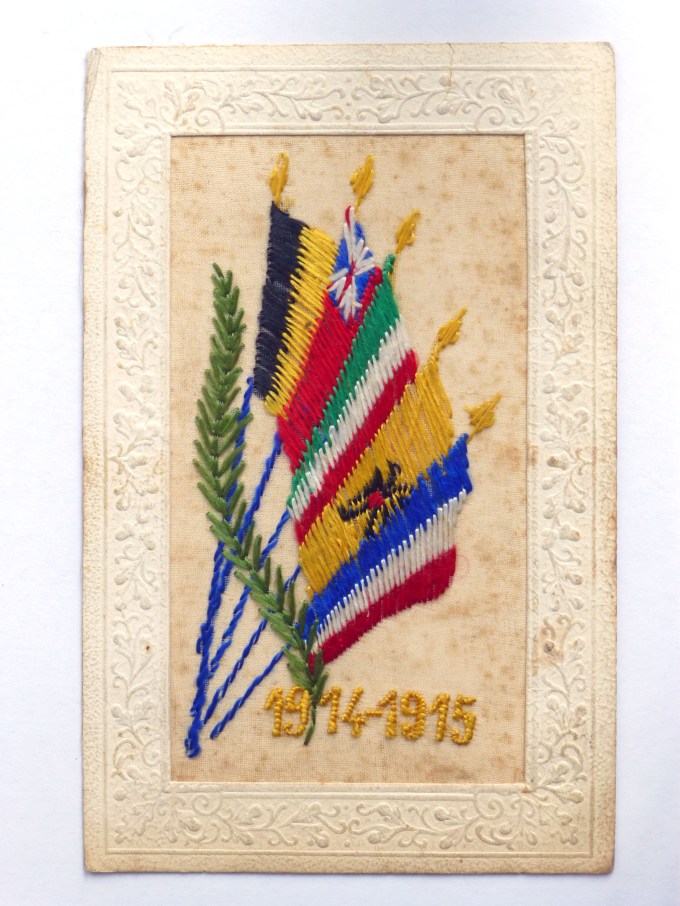
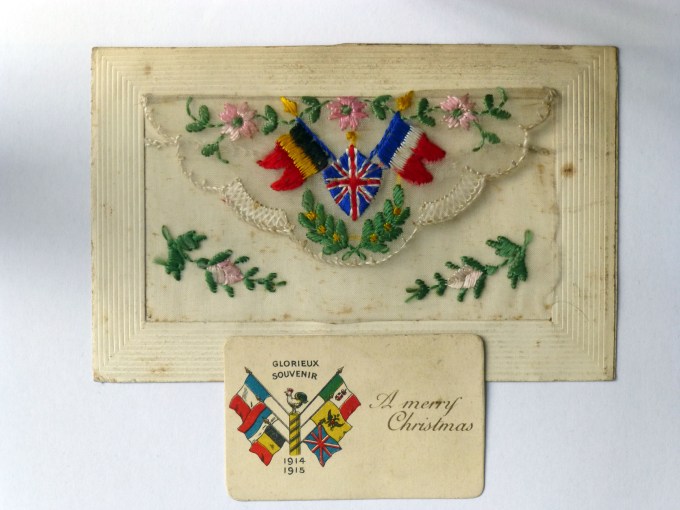
1914-15About 20 years ago dad gave me a photo album. It was full of postcards collected by his mother  Mary Ellen. These postcards are now just over 100 years old. Some had been sent by her brother from France during the 1st World War. They helped me get a picture of a side of the family I know little about, because dad hardly ever talked about it. But it’s more than that; it’s a social history too.
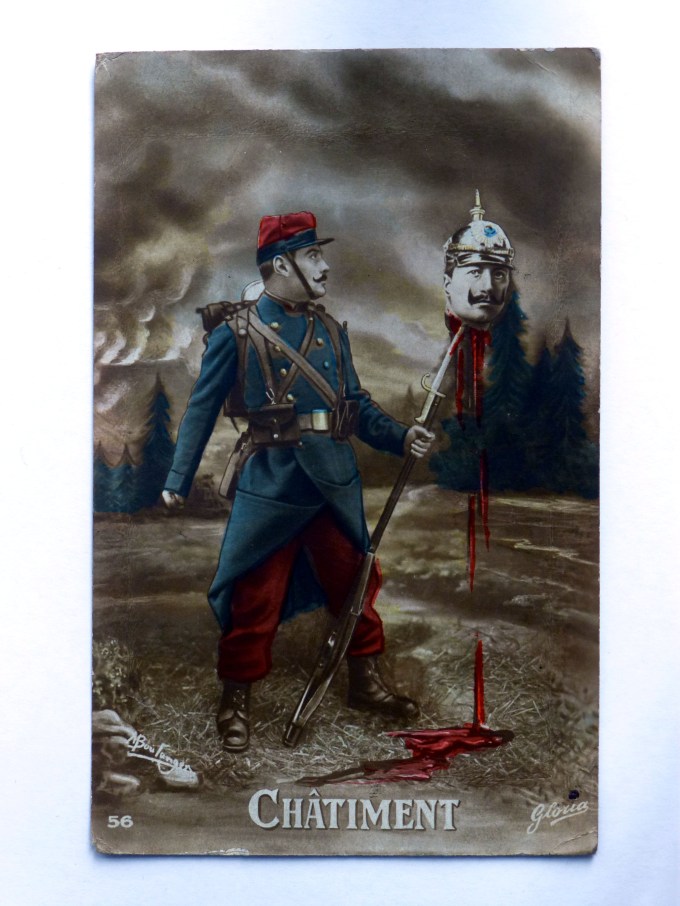
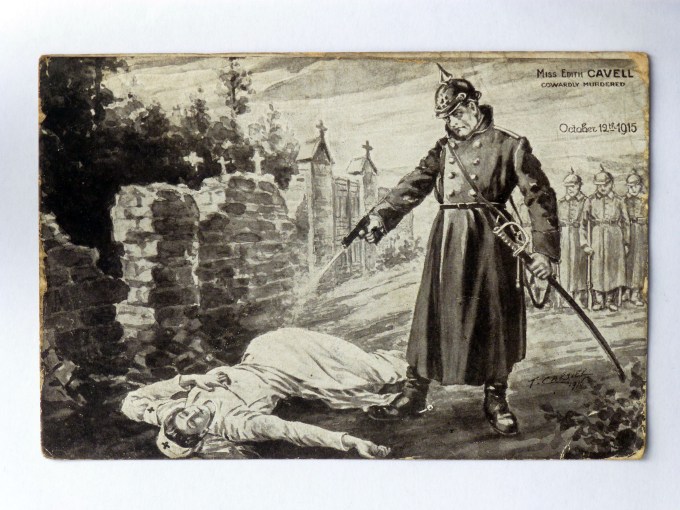
   Mary Ellen was of Irish decent like many living in Leeds. She was born Mary Ellen Quinn in 1897. She lived most of her adult life on Halton Moor Avenue but in 1914 her home was in Jack Lane in the centre of Leeds. The postcards are from her brother from the trenches in France. Not all of them were sent to her but I find it interesting that she saved them and made a collection from them. It’s not always obvious that ordinary stuff will one day be of interest.P1000632 The cards show what people – soldiers and the general public – thought the war was going to be like – stirring cavalry charges, glory and honour. As we now know it was far from that. The soldiers discovered this to their cost. The general public never did. Because of the propaganda of postcards such as this the truth was hidden from them. So there was a split between those who went to war and those who didn’t. And the split was never healed because the returning soldiers wouldn’t, or couldn’t, talk about it. Why? Well think what it’s like trying to tell others that your pain is worse than theirs. They tend not to believe you, or they suspect you of being a martyr. So you keep quiet.
   What I want to say is that this had an effect on my family. One of the soldiers in the war was Clifford Wells. He was invalided out of the war after being gassed. When he returned he met Mary Ellen. They married and my dad Dennis was born in 1923. My dad never got on with his father and so never talked about him to me. In fact I only found out his first name about 5 years ago. Clifford had a bad reputation. Dad called him a waster and said “he thought the world owed him a living”. I have no way of knowing how badly treated my dad was, but I think he was telling the truth. Dad had a tough life. It wasn’t easy living through the 1920s and 30s. All I am saying, in part defence of Clifford, is that both he and my dad were casualties of war. They embody the split between those who were there and those who weren’t. Dad couldn’t understand where Clifford was coming from. I’m pleading mitigating circumstances. The irony is my dad did his bit in the Second World War,
met mam when he was demobbed, married and I was born in 1948. History repeating itself. And in more ways than one. I didn’t get on well with dad. We didn’t talk enough. That’s why the Mary Ellen and Clifford story means so much to me.
  My birthday falls on the 1st July. This year that date marks the 100th anniversary of the first day of the battle of the Somme, the most disastrous day in British military history. British forces were told to march slowly in tight formation towards hundreds of German machine guns. They did. There were 60,000 casualties; a third of those died. I don’t know if Clifford was there but it is likely he was. If so, we his descendants are very lucky. Because of the 1st of July 1916, 20,000 future British families never came into existence. The only charity event I regularly support is Poppy Day.
   Mary Ellen died in 1957 aged 60 and is buried in Harehills Cemetery in Leeds. All I can tell you about Clifford’s later years is that he was still alive when I was born
forgetmenot

Muhammad Ali

ali

It seems trite to say that Muhammad Ali was the greatest boxer that ever lived. He was that, of course, but he transcended sport. He became a cultural phenomenon because of his impressive personality. He ran rings around journalists and commentators with his quick-witted humour.There are so many good stories about him and his fights, mostly made up I admit. This is perhaps my favourite.


In 1975 he fought Chuck Wepner. As he left his hotel room before the fight Wepner told his wife tonight she would be sleeping with the world champion. Wepner dropped Ali at the end of the ninth and in his corner told his trainer to ” start the car, were going to the bank, we’re millionaires” The trainer looked across the ring and said ” hang on, he’s getting up and he looks pissed off”. Ali won all the remaining rounds, cut him over both eyes, broke his nose and knocked him out in the 15th. When Wepner went back to his hotel his wife took one look at him and said ” so, is he coming over here or am I going to his place?”


It doesn’t matter if a good story is true or not. It’s still a good story.

Travelling Light

I have always thought that there was something wrong with me. Is it right that a person should get more pleasure from planning a holiday than going on it? Why have I got a clip- board containing the detailed plans of at least ten trips abroad that were never embarked on – mileage lists, fuel costings, hotel and campsite bookings (thank goodness for the “free cancellation” option), web searches on restaurants, places of interest. Google street is a godsend for someone like me. I have done so many virtual tours of St Remy in Provence that I feel there is little point in going there since I know it so well. Is it a sickness? And if so, is there a cure? But the more I read the more support I find for this admittedly minority point of view.
Here then, in my defence, are three quotations which give me comfort:-
“People say that life is the thing, but I prefer reading” (Logan Pearsall Smith)
“Do not participate: happiness lies in the imagination not the act. Pleasure is found first in anticipation, later in memory” (Gustave Flaubert)
“How can one prefer the disasters of your frustrated desires to the sublime faculty of summoning the universe to appear before the mind’s eye” (Honoré de Balzac)
Travelling light? You can’t travel any lighter than I do.

Albert Johanneson

AJohanneson1

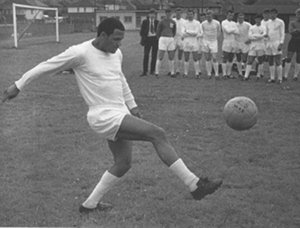
If you wanted to make a film showing the difference between football today and  football 40 or 50 years ago you could do worse than tell the story of Albert Johanneson. Albert was my first Leeds United hero. He was a fast and skilful winger who helped Leeds get out of the second division in 1963/4. He then became the first black player to play in an F.A. Cup final in 1965 when Leeds lost to Liverpool. He was the nearest thing we had to a Brazilian. We even used to look forward to watching him in the warm-up before the match, because he would entertain the crowd with show-boating, ball-juggling and tricks rarely seen in those days.

   His career didn’t last long and highlights all that was nasty about the unreconstructed game then. When Leeds went up into the First Division Albert wasn’t strong enough mentally, emotionally or physically to stand up to the cynical tactics used against him. There were no systems in place to protect him from the racial abuse or physical intimidation dished out by defenders in those days ( an area in which Leeds themselves were recognised masters, it must be said of course ). And when he left Leeds and went down the divisions eventually quitting the game, there was no safety net, no large nest-egg in the bank to break his fall. Within a few years Albert was destitute. He lived as a vagrant and turned to alcohol. He died alone in a town centre flat about 20 years ago. Tell that to the Man City players recently sulking because they were only on £200,000 a week.