When Charles met Fyodor


“Two souls live within me, each trying to pull away from the other” (Wolfgang Von Goethe)

When Charles Dickens met Fyodor Dostoevsky in 1862 two worlds collided. Two views of human nature. A traditional one and a modern, psychological one.
Whatever the undoubted merits of Dickens novels they are, for modern tastes, simplistic. Their characters have little, or no, psychological depth. They are either paragons of virtue, innocent victims such as Little Nell and Tiny Tim, or evil monsters such as Uriah Heep and Bill Sykes. This is perhaps surprising, since Dickens was well aware of the complicated nature of the human personality. He recognised it in himself. On the one hand he backed up his reputation as a morally upright person with many examples of selfless good works. But he knew he also had a dark side, a side to his character which he skilfully kept from his adoring public. He admitted as much to Dostoevsky. Dostoevsky later said that Dickens “told me that all the good simple people in his novels….. are what he wanted to have been, and his villains were what he was (or rather what he found within himself)”.
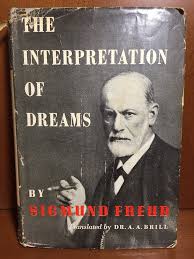
Dickens’ view of inner conflict was traditional in that he explained it in religious terms as a battle between Good and Evil. In characters such as Raskolnikov in Crime and Punishment Dostoevsky eschewed such simplistic notions and explored how conflict, anxiety and guilt worked. The claim that his novels prefigure the work of Sigmund Freud is not unjustified.
Dickens wouldn’t have known that of course, but Dostoevsky did give him a clue. When Dickens declared there were two people inside him, Dostoevsky replied “Only two?”
58A5F685-14BD-4923-8899-B41F31404147

In search of live music

26F7CE36-18C8-4DCF-B505-DF1E30061F2A

Marcel Proust was born in the wrong century. For a man who loved listening to music but who for periods of his life was reluctant to leave his bed, let alone his flat in Paris, getting himself to concerts was a chore. He tried two solutions to this problem. In 1911 he became a subscriber to Théâtrophone, a service that held a telephone receiver up at a concert and relayed it to people’s homes. Phones then, of course, had sound quality one step up from tin cans joined by a wire. It wasn’t that the reproduction was low-fi rather than hi-fi. It wasn’t even fi. What he really wanted was live music at home. And so it happened that one night in 1916 the French violinist and quartet leader, Gaston Poulet answered the doorbell at 11p.m. to find Marcel Proust on the doorstep. Proust had an unusual proposition. Would Poulet round up the rest of the quartet and come and play Cesar Franck’s String Quartet in D major that night at Proust’s flat? He had a taxi waiting. So that’s what they did. They played the piece in Proust’s candlelit bedroom while Marcel reclined on a green divan. It must have been good. When they finished at 2a.m. Proust asked them to play it again.

Proust was born about 100 years too early. Spotify would have been a godsend. But then again, if he’d lived in the era of video cameras and social media he might not have seen the point of recreating the past in written form. We don’t see the need to go In search of lost time. We carry it around with us.

The most beautiful walk in the world

IMG_0905

There is a book, written by John Baxter, called The most beautiful walk in the world. He’s not talking about an Alpine trail or a hike in the Scottish Highlands. He reckons it’s in Paris. And I would tend to agree. I much prefer walking round a town to hiking in the countryside. I don’t think it’s laziness; I did some strenuous fell walking as a young man. I just find more of interest to look at and photograph in the city. I’m impressed by spectacular views in nature but the wonder wears off. So I smiled when I found these quotes:-

“I like a good view, but I prefer to sit with my back to it” (Alice B. Toklas)

“Je suis incapable de m’attendrir sur les végétaux.” (I am incapable of being moved by vegetation) (Charles Baudelaire)

I suppose those words are not surprising coming from the flâneur Baudelaire. You just couldn’t see him with anorak, map and compass. Cognac and cigar, yes. Hiking boots, not really.

The power of art

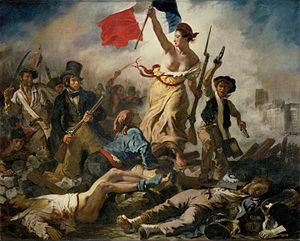
There was a time when a painting could make or break a government. It could serve as propaganda for a political movement. In 1830 Liberty leading the people by Eugène Delacroix promoted the republican cause:-

D8163CB3-C202-4FBA-B84C-5EC79571F9CB

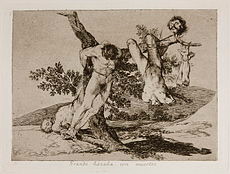
Or it could express defiance in the face of an unwanted establishment. I know of no more shocking anti-war statement than Goya’s Disasters of War, which shows the barbarity of the conflict during the Spanish uprising against the French at the beginning of the 19th century:-

240040AE-95DA-4096-B5AE-8ACD6230B59F

But those days are gone, aren’t they? Painting no longer has this power.

Or does it?

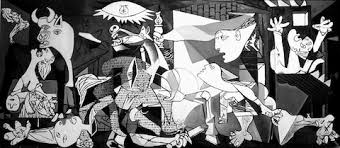
In February 2003 an American delegation to the United Nations was making its case for armed intervention in Iraq. The press conference following Colin Powell’s presentation to the Security Council was about to take place live on TV. Then someone noticed that on the wall, in full view of the cameras, was a large reproduction of Picasso’s Guernica, his powerful protest against the 1937 German/Italian bombing of a defenceless Basque town. Screaming women, dead babies, burning houses, suffering animals. So they covered it up. Who’d have thought it? The most powerful government in the world threatened by a painting. In the 21st century. Maybe those days are not gone after all.

FD167062-5C7A-40F0-AA3A-DC11F623D667

The Bash Street Kids

8C3F7232-2B0C-4E26-AF4F-4FF4236C2A5C

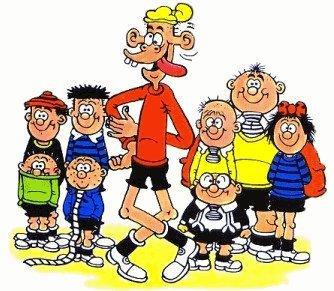
Leo Baxendale, the creator of the Bash Street Kids, died recently at the age of 86. When I was a paper boy I read every comic in the bag – Beano, Dandy, Topper, Beezer, Tiger, and more. I loved the names created by Baxendale. In the Bash Street Kids you found Smiffy, Spotty, Toots and, my favourite, Pug. Elsewhere he introduced us to Clever Dick, Grimley Feendish and the amazing Sweeney Toddler.
It’s a lost world and one I have a lot to be grateful for. My granddad Bill taught me to read before I started to go to school by reading comics to me. He used to walk up from work for lunch, sit me on his knee and introduce me to the Bash Street Kids. Thanks Bill, and thanks Leo.

Travelling Light

5CD3D0A3-1E0A-4A7F-903E-20ED046C0DAD

I have always thought that there was something wrong with me. Is it right that a person should get more pleasure from planning a holiday than going on it? Why have I got a clip- board containing the detailed plans of at least ten trips abroad that were never embarked on – mileage lists, fuel costings, hotel and campsite bookings (thank goodness for the “free cancellation” option), web searches on restaurants, places of interest. Google street is a godsend for someone like me. I have done so many virtual tours of St Remy in Provence that I feel there is little point in going there since I know it so well. Is it a sickness? And if so, is there a cure? But the more I read the more support I find for this admittedly minority point of view.
Here then, in my defence, are three quotations which give me comfort:-

Logan Pearsall Smith “People say that life is the thing, but I prefer reading”

Gustave Flaubert “Do not participate: happiness lies in the imagination not the act. Pleasure is found first in anticipation, later in memory”

Honoré de Balzac “How can one prefer the disasters of your frustrated desires to the sublime faculty of summoning the universe to appear before the mind’s eye”

They say travel broadens the mind. I agree, particularly if you only ever travel in your mind. Travelling light? You can’t travel any lighter than I do.

Skiffle

In the summer of 1954 the popular music world was continuing in its usual easy listening way. Doris Day and Perry Como were riding high in the charts on both sides of the Atlantic. But, within a two-week period in July two events happened, one in Memphis, the other in London, that lit a fuse which a year later would blow that cosy music world sky high.
On the 5th July a certain unknown singer called Elvis Presley was larking about in Sam Phillips’ Sun recording studio in Memphis, jokily singing a Blues song, when Phillips recognised something he’d been looking for for years, a white guy who could sing black music without losing its sexual energy. Elvis was on his way. Within a matter of weeks, on the 13th July, the Chris Barber Jazz Band was recording an album in London when they realised they were short of material. Their banjo player, Lonnie Donegan, suggested they did some of the skiffle material they sometimes played. One of these songs was Rock Island Line. In 1955 it became the first British debut single to attain gold status and, as a result, skiffle spread throughout the UK. Skiffle was roots music played on cheap basic, sometimes home-made, instruments.
The two events were unconnected but had a combined effect. Young people in the UK saw Elvis as a far-off, unattainable dream. Skiffle gave them a means of at least striving for it. John Lennon in 1950s Liverpool, at the moment he heard Heartbreak Hotel, wanted to be Elvis. Now, with skiffle, he could do something about it. What he did was form the Quarrymen and use his skiffle band to play rock’nroll. And he wasnt the only one. Hundreds, probably thousands, of British teenagers did the same. At exactly the same time as Lennon formed his group I watched my two uncles, only five years older than me, rehearsing in Leeds with cheap acoustic guitars, tea-chest bass and washboard. They progressed to drums and electric guitars, as did Lennon and McCartney, in order to play Chuck Berry and Shadows music. They didn’t make the big time but they enjoyed the ride.
There was an ironic outcome to all this. Skiffle was always small fry compared to Elvis. It was rough, cheap and amateurish. But out of it came the 1960s British music invasion of the US, led by the Beatles, which swept all before it, including Elvis.
I saw it happen, without at first realising what was happening. I went from skiffle to rock’nroll to the Beatles. And I never shed a tear for Doris Day or Perry Como.

Just give me some of that rock and roll music

F29FE726-C228-4807-B0AD-CF32F8B40129

In 1977 the Voyager 1 space probe was launched by NASA. On board was the Golden Record which contained information designed to inform anyone out there who we were. Some of it was music – Bach, Beethoven and Chuck Berry’s “Johnny be good”.
A reply from space has finally been deciphered.
4 words.
“Send more Chuck Berry!”

Hearing is believing

One of my favourite football stories concerns the 1997 Cup Final. And it’s not really about one of the players. Di Matteo was in the Chelsea team. He has a sister, Concetta, who is blind. This does not stop her going to matches, however. Someone accompanies her and describes the game to her. I would love to hear a recording of that commentary when at the kick-off Concetta’s brother latched on to a pass and scored a screamer high up in the net after only 54 seconds. Her reward for overcoming adversity.

In my life

44B2E5B8-0AD2-4C58-8ECF-615DF5781353

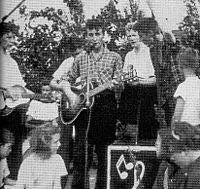
A rebel at school, a member of a Liverpool skiffle group who went on to become a multi- millionaire, touring America with his band. John Lennon? No, actually, I’m thinking of his best mate at school, Pete Shotton who died recently aged 76. He’s the blond one behind Lennon in the above photo of the Quarrymen, the skiffle band formed by Lennon in the late 1950s.

It’s arguable who had the most interesting life, Lennon or Shotton. Shotton left the Quarrymen when McCartney and Harrison joined but Lennon never forgot him. Several times, after hitting the big time, Lennon gave Shotton money. Shotton used it to open a supermarket then bought the franchise for a chain of American-style diners called Fatty Arbuckle. He eventually sold them for £20 million. When the Beatles needed someone to help run their Apple boutique in London they sent for Shotton. When it closed he became Lennon’s P.A. (until Yoko arrived). In the 90s, on the anniversary of the Cavern, the Quarrymen were reformed and Shotton appeared with them at Beatles conventions around the world.
Lennon and Shotton, two kids larking about in Liverpool. Two exciting but different lives, one a full life, the other cut short. Lennon was 40 when he was murdered in New York. You don’t have to be famous to live well. And fame doesn’t always mean an easy life.

Though I know I’ll never lose affection / For people and things that went before / I know I’ll always stop and think about them” (In my life – John Lennon)