Be careful what you wish for


In the growing climate of anti-royalist feeling in pre-revolutionary France there was a cult of admiration for republican Rome. Jacques-Louis David, who had a track record of jumping on promising bandwagons, produced these two paintings at that time as a salute to the popular Roman values of heroic, male stoicism.

From their schooldays the French audience would know the stories the paintings referred to. The first, titled “The Lictors bring to Brutus the Bodies of His Sons”, tells of Brutus who led the Roman revolt that expelled the King and brought about the first republic. As consul, one of his first tasks was to pass judgment on conspirators who tried to bring back the king. Among the conspirators were two of his sons. The verdict was death. He did not spare his sons. With the others, they were flogged and beheaded. The painting shows the moment the dead sons are returned to an admirably impassive, stoic Brutus. We are meant to contrast this male strength with the weakness shown by the despairing mother and sisters on the right of the painting. The French public is being given a lesson on the qualities needed to conduct a revolution.

The second more famous painting, titled “The Oath of the Horatii”, instructs us with the same contrast. Strong males and weak females. Rome is at war and this war will be settled by three champions selected by both sides. The three sons of the Roman Horatius will fight for Rome. We see them proudly receiving their weapons from their father while mother and sisters again despair. An 18th century audience might also be aware of the events following the oath. Rome wins but only one son returns. All the enemy’s champions have been killed, including one who happened to be engaged to one of the Roman sisters. When her surviving brother returns, she weeps for her fiancė. For this crime against Roman stoicism, the brother kills her. His sister.

With hindsight, knowing what we know about the subsequent course of the French Revolution, it is a shame the French are unable to ask Jacques-Louis David a question. What were you promoting with these paintings? Simply the strength of character to pursue the cause? Dutiful, patriotic determination? Surely you didn’t mean we needed to kill our sons, daughters and sisters In the name of Roman virtue? Or did you? Because that’s what happened next.

After the fall of the Bastille, at first aristocrats, royalists and moderates, as long as they swore allegiance to the republic, lived safely. What David and other armchair revolutionaries could not have foreseen, however, were the events of 1793 and 1794. The Terror.

The Terror, that time of fanatical infighting and bloodletting, was the time when David’s ideal of Roman stoicism was pushed to it’s appalling limits. Factions competed with each other to be the ultimate Brutus in the way that they dealt with royalist conspirators. Thousands of so-called conspirators were imprisoned simply for their unacceptable beliefs. In September 1792 around half of them were massacred by the Paris mob. Women were not spared. Prisons which had been reserved for women suffered the same fate. The Princesse de Lamballe, a companion to Marie Antoinette, was, like many others, brought to an impromptu tribunal in prison. When asked to swear an oath of hatred for the king, she refused. At which point a door opened and she saw the fate awaiting her; men with axes and knives. She was led out and butchered.

At the height of the terror whole families were guillotined simply for being aristocratic. Like Brutus and Horatius before them, Jacobin leaders purified those families that did not live up to the Roman/revolutionary ideal by slaughtering sons and daughters. Chrétien de Malesherbes had committed a double crime. He was aristocratic and, as a lawyer, had conducted the defence at the king’s trial. On the day he was executed he was made to wait and watch while his daughter and a granddaughter were guillotined before him. Soon after, his 76 year-old sister followed him to the scaffold.

Be careful what you wish for. In promoting Roman stoic virtues perhaps Jacques-Louis David and other pre-revolution idealists did not foresee events such as these. But that suggests they did not fully appreciate the messages within the paintings. It’s not even as if these messages were coded. They were hiding in plain sight. When the mob rose, the writing had been on the wall for some time. And so had the paintings.
The power of art

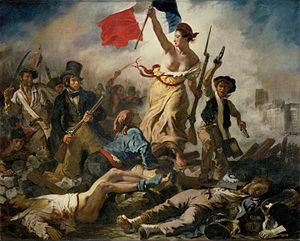
There was a time when a painting could make or break a government. It could serve as propaganda for a political movement. In 1830 Liberty leading the people by Eugène Delacroix promoted the republican cause:-

D8163CB3-C202-4FBA-B84C-5EC79571F9CB

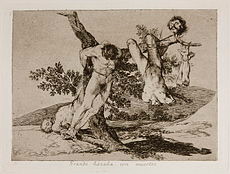
Or it could express defiance in the face of an unwanted establishment. I know of no more shocking anti-war statement than Goya’s Disasters of War, which shows the barbarity of the conflict during the Spanish uprising against the French at the beginning of the 19th century:-

240040AE-95DA-4096-B5AE-8ACD6230B59F

But those days are gone, aren’t they? Painting no longer has this power.

Or does it?

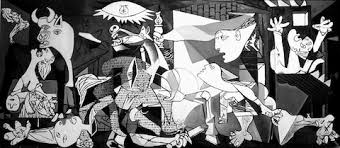
In February 2003 an American delegation to the United Nations was making its case for armed intervention in Iraq. The press conference following Colin Powell’s presentation to the Security Council was about to take place live on TV. Then someone noticed that on the wall, in full view of the cameras, was a large reproduction of Picasso’s Guernica, his powerful protest against the 1937 German/Italian bombing of a defenceless Basque town. Screaming women, dead babies, burning houses, suffering animals. So they covered it up. Who’d have thought it? The most powerful government in the world threatened by a painting. In the 21st century. Maybe those days are not gone after all.

FD167062-5C7A-40F0-AA3A-DC11F623D667

Rosebud

79E0D528-CB1B-4256-AB2F-3A72BB30EA0A

Orson Welles’ film “Citizen Kane” begins with Kane on his deathbed. As he expires he utters the word “rosebud”. It is only at the end of the film, after we have witnessed his ruthless rise to enormous wealth and power, that we find out that rosebud was the name of his favourite toy as a child, a simple wooden sledge. As he died, after a life of material success and glory, he chooses to think of a time of innocence and purity.
One evening in November 1787 a young French artillery officer, recently arrived from the provinces, decided to go to the galleries surrounding the Palais Royale in Paris. At that time the Palais Royale, in spite of its grand name, was an amalgam of contemporary shopping mall, amusement park and red light district. There, everything was for sale. The officer found what he was looking for, and escorted the young girl back to his lodgings. Afterwards he wrote about the evening in a notebook. What is clear from his words is that the event was more than a transaction. The young woman deeply impressed him. Less than 15 years later he became Emperor of France. He had 20 years of unparalleled fame, wealth and glory. When Napoleon Bonaparte died in 1821 the notebook was found among his belongings. Throughout his rise to power Bonaparte had kept and protected the account of his naive and nervous first sexual experience. The night at the Palais Royale was Napoleon’s “rosebud” moment. Is it going too far to speculate that had Welles made a film of Napoleon’s life, it would have started with him on his deathbed on St Helena uttering the words “Palais Royale”?

New Hartley Pit Disaster

51B716AF-8AE3-4358-A10D-3A996270E54E
South Northumberland, where I live is – or was – pit country. Most of the villages had a pit, some 2 or 3. They all had more than one shaft. The reason? Because of legislation relating to the New Hartley Pit Disaster of 1862 when around 200 miners died after being trapped in a one-shaft mine when the 40 tonne cast iron pump beam snapped and collapsed into the mine. The death toll was so high because it happened as the shifts were changing over. When they were found it was clear they had tried to dig themselves out but had finally had to give up. Fathers were found lying side by side with sons. The funeral cortège with the 200 coffins stretched for 4 miles.
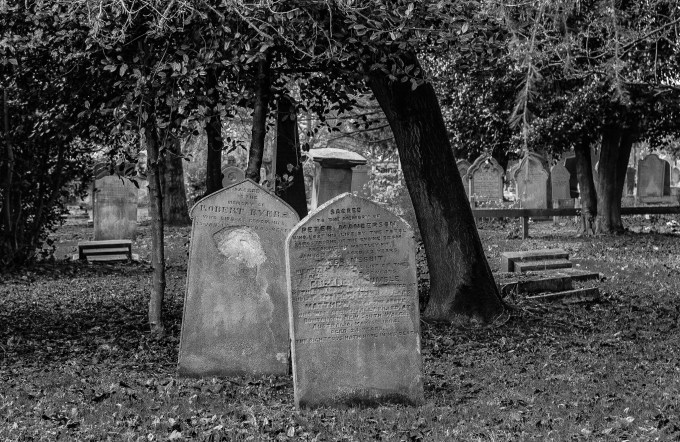
There is a church and graveyard opposite where I live in Cramlington – about 5 miles from New Hartley. I was out the other day trying out a new camera, photographing the church and gravestones.. Because they have inscriptions on them it’s a good test of sharpness. Later I enlarged the photos and found one with a very weathered inscription with 2 names on it, Peter Manderson and Peter Nesbit. The rest was illegible apart from one bit which said ” who lost his life by the fatal catastrophe of the engine beam breaking at Hartley pit”. When I checked, the records confirmed that they were among the fatalities. Nesbit was Manderson’s nephew. I guess they were found side by side.
I wasn’t keen on history at school. It only comes alive when you have a link with the past in front of you. I pass that gravestone every day. I’ve known of the New Hartley pit disaster for a while. It means something now..