Why Mr Jones does not know what is happening

You walk into the room, with your pencil in your hand,

You see somebody naked and you say “Who is that man?”

You try so hard but you don’t understand

Just what you will say when you get home

Because something is happening but you don’t know what it is,

Do you, Mr Jones?

( Ballad of a Thin Man Bob Dylan )

In philosophy there is a method of thinking with the daunting name of phenomenology. It is a method based on the belief that the best way to approach thinking about something is at first to simply describe it accurately without reference to extraneous matters such as received ideas and beliefs. These matters are called the “epoché”, the irrelevant concerns that should be set aside while you focus on the object at hand.

Importantly, this affects how you should view, think about – and talk about – art. Looking at, and talking about, a work of art in the light of your knowledge of art history, for example, leads you to think in terms of categories and to make false assertions about artists’ intentions. Good teachers, when asking students to write about works of art, remind them constantly to go back to the work itself, to describe what they see rather than make judgements from what they know about the artist.

Even more importantly, artists themselves think phenomenologically. The art critic Ernst Gombrich states that art creation is a balance between knowledge of previous ways of depicting reality and the wish to create new ones which are a better match with the way they see nature. So a good artist is a phenomenologist in two ways – he focusses precisely on what he can see and tries to avoid relying on “schemata”, received ideas of how to represent this. This is why Constable said that when he painted he tried to forget he had ever seen a picture. It is what Monet was getting at when he stated that he wished he had been born blind. In phenomenological terms great artists refuse to attend to the “epoché”; they put aside those things outside the object being observed – formulae, received ideas, schemata.

Which brings me to Bob Dylan. When have you ever seen a conversation between a journalist or critic and an artist where the artist does not appear uncomfortable and on the defensive? The reason is that in such interviews there is a phenomenological divide between the questioner and the artist. The journalist/critic is often asking questions about the very things the artist has tried to reject when making his/her art. The questions are referring to the epoché and not the art itself.

When in this situation, rather than be discomforted Dylan chose to give journalists a hard time. Most journalists he faced were of an older generation out of touch with contemporary popular music. They could hardly attend to the phenomenology of a music they had never listened to. So they fell back on the received ideas they had gathered about Dylan”s music – its place in the “protest movement”, its influence on young people, Dylan”s supposed role as leader of the younger generation. We can see examples of the kind of questions he was asked in Martin Scorsese”s film No Direction Home. “How do you label yourself?” “What’s your role?” “Do your songs have a subtle message?” “Do you consider yourself the ultimate beatnik?” “What message were you trying to impart by wearing a Triumph motorcycle T-shirt on the cover of Highway 61 Revisited?” It is not just the fact that these questions are obviously plain stupid. They represent the wider problem of how non-artists approach artists. Even serious Fine Art critics often miss the phenomenological point. How often do we hear “What are you trying to say?” “What does this mean/symbolise?” “What point are you making?” “Would you call yourself a (apply label here)?”

Famously, Dylan wrote a song about what I call the phenomenological divide; about the journalist who puts his eyes in his pocket, the journalist who only knows of the epoché. In “The Ballad of a Thin Man” Dylan tells the journalist “You don’t know what is happening here, do you Mr Jones?” It has long been known that the song is about journalists and their stupid questions. Phenomenology explains why their questions are stupid.

Biff and Oscar Wilde’s Lost Sock

4D88F6D3-EF61-4D5F-9ED4-0D76D2B980BE

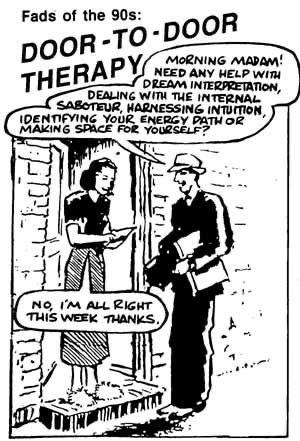
Biff is a British cartoon strip created by Chris Garrett and Mick Kidd in the 1980s. Its humour deflates pretentiousness by placing it in an everyday setting. Melodramatic, self-regarding, would-be poets are brought down to earth by ordinary people. Or pompous language is deflated by a non-sequitur

FC211546-FD73-4718-8F45-47530EC2326B

The cartoons are funny but they have a ring of truth. When I read them I know I’m laughing at myself. Oscar Wilde would have appreciated them. He tells a story of once going down to the Seine and, in true Romantic poet style, thinking of jumping in. On a bridge he saw another man looking down into the river. “Are you also a candidate for suicide?” Wilde asked. “No, I’m a hairdresser” came the reply. The comical non- sequitur so cheered Wilde up that he changed his mind.

In one cartoon a 1950s style teenager despairs with the words “I feel like a lost sock in the laundromat of oblivion”. With my slight adjustment to the boys name his girlfriend asks “Is it Angst, Oscar. Or is it just the lager?”


Irony and Ideology

98325CA0-A5C4-4A35-97DB-B438429AEEAC

Do ideologues understand irony? I doubt it. Not the verbal kind at least. When the words you use express the opposite of the literal meaning. People of conviction don’t mince their words. That’s why you should mistrust ideologues. People who don’t question themselves are blinkered and dangerous.

When Austria became part of the Third Reich in 1938 Sigmund Freud knew it was time to leave Vienna. Himmler was minded not to let him go to America but President Roosevelt arranged for him to get the necessary visa. When the Gestapo delivered it they asked him to sign a document to confirm he had been well treated. Freud did sign but added a sentence – “I can heartily recommend the Gestapo to anyone”. This was taken at face value. I like to imagine the Gestapo officers smugly leaving with the apparently glowing recommendation.

German scientists during WW2 were among the best in the world. They  designed the first jet fighter planes, the first guided missiles and came close to producing the first atomic bomb. But they never developed an irony detector.

Mi sofá es su sofá

I have a bone to pick with L P Hartley. Famously, the opening line of his novel The Go-Between reads “The past is a foreign country; they do things differently there”. He is emphasising what separates us from abroad and us from the past.

Consider these, however.

When Jean-Jacques Rousseau wrote Confessions in the late 18th century he introduced the public to a new kind of subject; himself, his thoughts, his feelings. Hundreds of readers, reclining on their chaises longues, showered him with fan mail.

Marcel Proust, the famous novelist and hypochondriac, loved music but hated going out. He resorted to inviting a string quartet to his house to play for him while he reclined on his green couch.

Gustave Flaubert was torn between his desire to travel and the comforting cocoon of his home. His friend Maxime du Camp complained that his friend would have liked to travel stretched out on a sofa, watching landscapes pass before him like the screen of a panorama mechanically unwinding.

What fun they would have had with modern technology. Flaubert with Google Street, Proust with Spotify, Rousseau’s public with Facebook. Surely they weren’t that different from us, were they?

The phrase “ mi casa es su casa” refers to a generosity of spirit that wants to share with other people. Sorry L P Hartley but I like the idea that people of the past shared similar needs and feelings with us today. As I recline at home with my smartphone I imagine myself reaching out with the words “ mi sofá es su sofá “.


The “Where are they now” trope

F1FC5FAA-E608-49D0-88B1-3C9058FF5049

The end credits of the comedy film A Fish called Wanda include the final joke; we are informed that Kevin Kline’s evil character will go on to become minister for justice in South Africa. The writer John Cleese is making use of the now common “where are they now” trope popularised by George Lucas when he lists the fate of the characters at the end of American Graffiti.

The trope depends on irony. So I was not surprised to discover that the trope was employed by the master of irony, Gustave Flaubert. In a novel. More than 100 years before those two films.

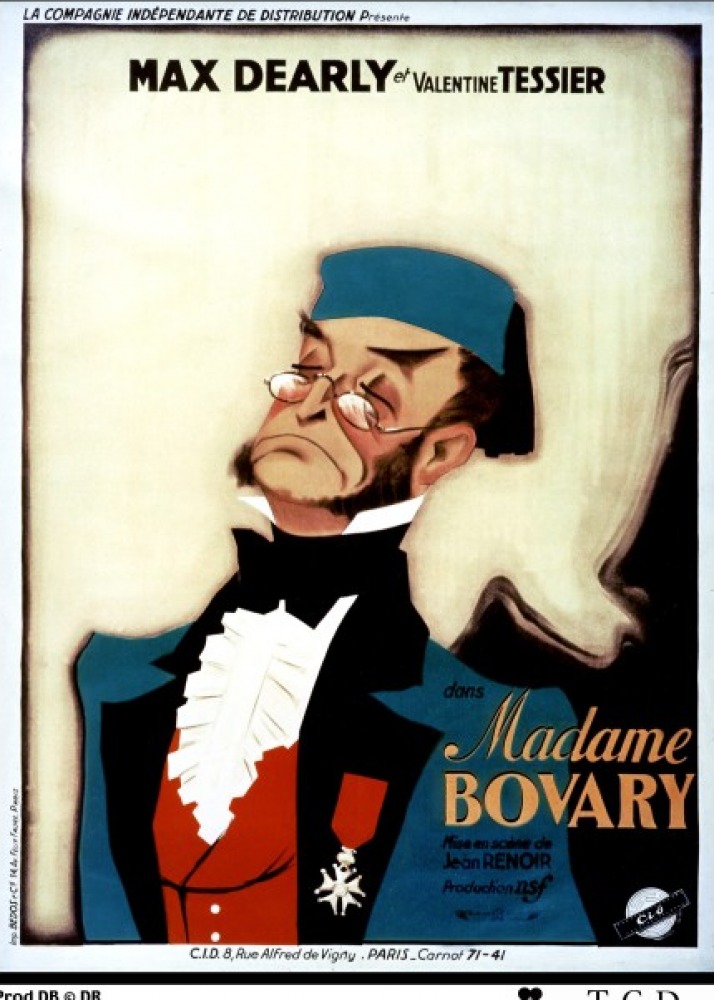
Madame Bovary, published in 1856, has a kind of end credit. An ironic one intended to make us smile at, and despair over, the state of bourgeois France, represented by the ignorant, incompetent Monsieur Homais.

The final sentence translates as – “ He has just received the Legion of Honour”

False Friends

C472F790-B2F2-4EF7-A5CE-371E73C3B401

When you start learning French you are always warned about “faux amis”, false friends. Words that look as if they have an obvious meaning but which mean something quite different. So “assister” means to attend, not to help. A teaching colleague of mine, an elderly and unworldly spinster, was unaware that the word “préservatif” was a false friend. Her 6th form students knew that it was French for “condom”, so they enjoyed the lesson in which the word featured and their teacher proceeded to try and explain why the couple in the story they were translating might be in need of jam.

The interesting thing is that a false friend can change the meaning of a phrase. “Ancien” in French means “previous” not “ancient” but this has not prevented the term ”ancien régime”, the political system toppled by the French Revolution, from being wrongly associated in many minds with the words “ancient” or “archaic”. In fact the term was first used in 1790 by the Comte de Mirabeau in a letter to the King. He was simply referring to the previous regime.

So what? Well it can lead to misunderstanding. It is generally believed that the French Revolution came about because the political system was old, out of date and crumbling. This has been partly encouraged by the false friend “ancien régime”. In actual fact it can be argued, as indeed it is in Simon Sharma’s brilliant book Citizens, that the regime collapsed because of the bungled way in which it was trying to modernise in the 1780s.

A similar process seems to operate in the case of the English phrase “the Dark Ages”. The phrase was coined to describe the era in which only limited written evidence has come down to us. The age is dark because little light is shed on it. However, the word “dark” operates as a false friend because it can be associated with words such as sinister, dangerous, savage, uncivilised. And this hides the fact that the limited evidence we have from medieval times points to the existence of poetry, refinement and craftsmanship.

We are well aware of the dangers of false news. We should also recognise that false news is sometimes brought by false friends.

Why looking is like tasting

E58466E7-E1A8-40E2-9CB1-04B9181D94F5

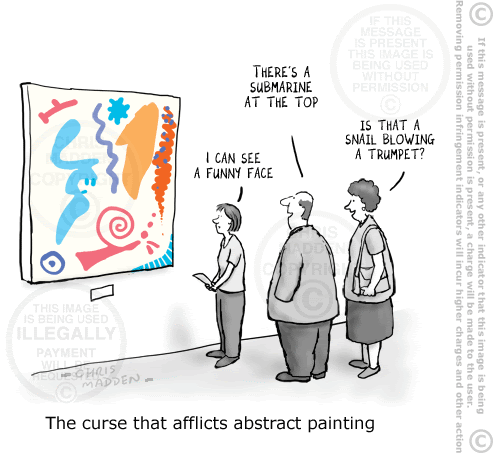
When I’m asked why I like an abstract painting I usually reply that I like the look of it. This is often not accepted as an answer, particularly if the questioner is not a fan of abstract art. I am usually then asked why I like the look of it. This does not happen when the conversation is about food. If I say I like cheese no-one ever asks me why. If they did I would simply say I like the taste of it. No-one would challenge that answer.
In other words, enjoying looking at something is not seen as believable, even though for me neither the enjoyment of looking at art nor the enjoyment of eating require explanation. Unless I come up with a verbal explanation of why I like looking at something I am seen as a fraud and abstract art as a hoax.

The truth is that explanations of why you like the look of something are like explanations of why you like the taste of something. They are false rationalisations. You may say that the colours are harmonious, the composition is balanced, this cheese has a nice texture,  but these are just describable attributes which we work out after the initial attraction. This initial attraction cannot be verbalised. Please stop asking me why I like the look of something.
It is not by accident that the word taste applies to art as well as food.

It was alright in the 1870s

There is a tv program called “It was alright in the 1970s”. It shows politically incorrect clips from 1970s tv programs to prove how attitudes have changed over the years, the idea being that those attitudes were normal then and so perhaps excusable. This, of course, is the argument made by several ageing celebrities today to excuse behaviour now seen as sexual harassment and abuse.
One of the problems this causes is how one should view the work of writers and artists with similar problematic pasts. The issue becomes even more difficult the further one goes back in time as behaviour and attitudes become even more remote from what is acceptable today.
Consider the case of Victor Hugo. By 1870 Hugo was 68 and one of the most famous men on the planet. He used this fame to attract and seduce huge numbers of women. During the five- month siege of Paris at the end of the Franco-Prussian war in 1871 Hugo had approximately  one sexual encounter per day, a total of 40 different partners. They were actresses, prostitutes, fans who came to see him.  We know this because he recorded them, in semi code, in his diary. He often changed their names into male equivalents and used code words to indicate the type of activity. He also recorded what he paid. Hugo was very careful with money. All his life he kept accurate accounts and so felt compelled to record his transactions with women. And here’s the point –  he clearly had a conscience about this. He recorded these payments  with the abbreviation “sec”, i.e. “secours” meaning alms. Hugo saw this as giving alms to the poor. He wanted to believe he was doing these women a favour. In his lifetime this amounted to hundreds, if not thousands, of favours. This is the man who appealed for our sympathy for the abused prostitute Fantine in Les Misérables.

Hugo had a wife and a long-standing mistress who he cheated on with another married woman – a ménage à quatre? The married woman’s husband had them investigated for adultery. She was imprisoned. Hugo was not. He was above the law because he was a French peer.
His diary also reveals that he viewed  his female servants and cooks as another source of sexual gratification. Their plight surely gives cause for concern. What choice did they have? Say yes or look for another job? What is the difference between their situation and that of Harvey Weinstein’s female employees? How many of Hugo’s conquests would have wished to be able to raise their hand and declare “Me too”? Should this influence our judgement of Victor Hugo and his work? Or do we simply shrug our shoulders and think it was alright in the 1870s?

Stranger things happen at sea

D86F09E8-D903-4A9D-826D-7CCFFA856820

When I was young one of my comics had a section called Strange but True. This story should have been in it.

In 1898 an American writer, Morgan Robertson,  published a novella called Futility. It described the maiden voyage of a British luxury liner famous for its impressive technology which renders it practically unsinkable. On the fourth night of its journey, travelling at reckless speed, it hits an iceberg and sinks with the loss of many lives due to a shortage of lifeboats. Robertson called his fictional ship Titan – 14 years before the Titanic was named and built.

It is a shame therefore that Robertson’s book did not sell; someone might have taken notice

The Sound of Silence

9C612A83-9AF4-47ED-AE62-C93125A8D199

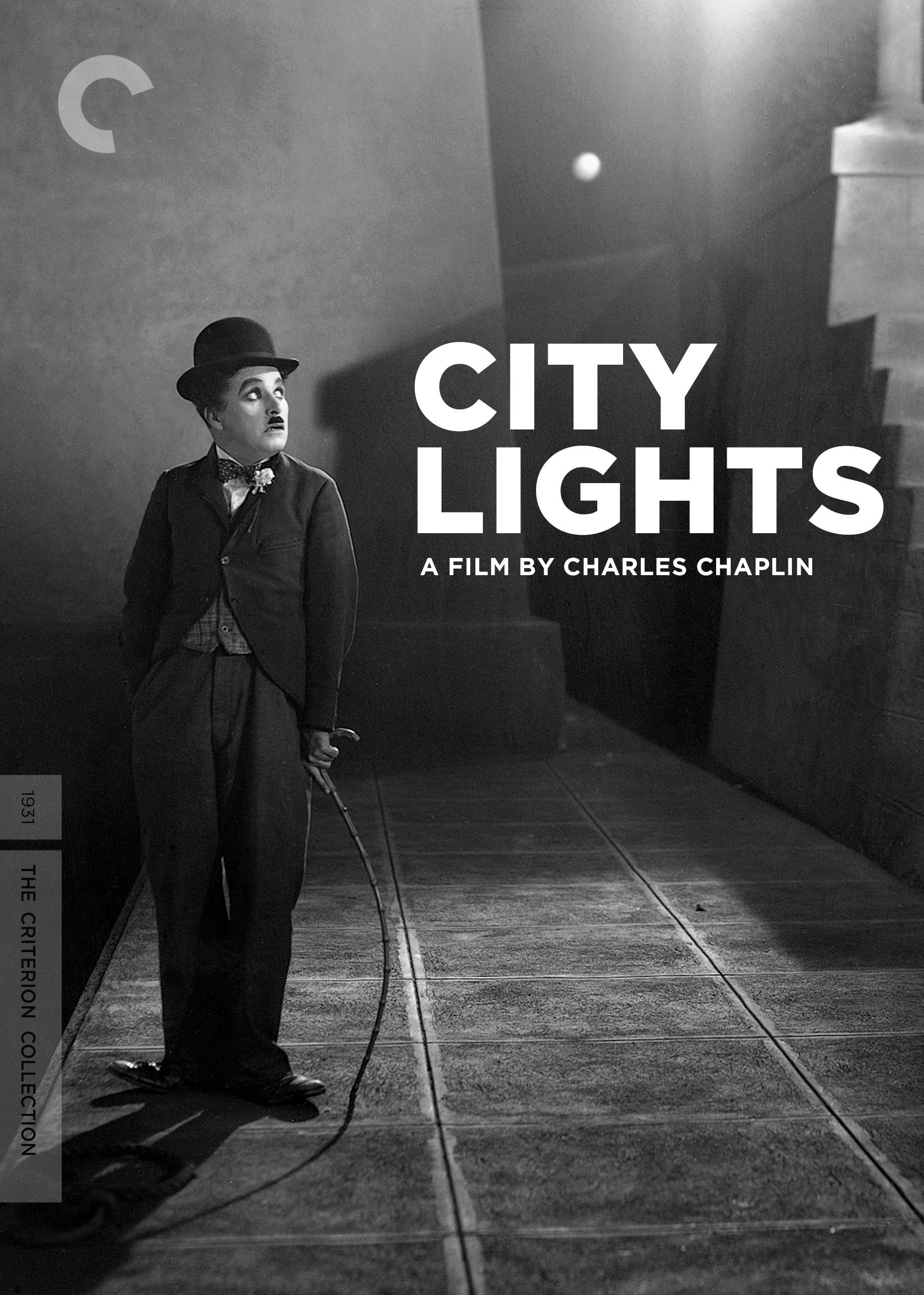
By the end of the 1920s Charlie Chaplin was the most famous person in the world. His films were successful in every continent that had cinemas. He had complete control over the devising, directing and editing of his movies and was free to highlight his talent for mime. The essential ingredient of mime – the one that made his comedy so universally understandable – was, of course, silence. In 1928, however, the year Chaplin started work on his new film “City Lights”, there was a cloud on the horizon. The big success of the year before had been “The Jazz Singer” which demonstrated the popularity of a new technology – film sound. By 1929 8,000 cinemas had been wired for sound. Chaplin realised that this was a threat to his pre-eminence. What would the little tramp’s voice sound like? Chaplin himself had a strong cockney accent. Furthermore, sound would change the nature of film, particularly its pace. Chaplin’s films were masterpieces of rhythm and pace. Dialogue slows action down. How would Chaplin react?

Chaplin stuck to his guns and made “City Lights” into one of his greatest silent movies. It’s success seemed to vindicate Chaplin’s belief that film was essentially a silent medium. You would think  that “City Lights” would reinforce  Chaplin’s absolute self-belief. However, I think it is possible to interpret the film’s final scene as a demonstration of Chaplin’s growing doubts and fears.

In the film Chaplin’s tramp falls for a blind flower-girl and, colluding with a drunk millionaire, pretends that it is he who is her benefactor. In the final scene the tramp encounters her again and places a coin in her hand. She recognises him from this gesture. “You can see now” he asks. “Yes I can see now” she replies. The film ends with a look of terror on the tramp’s face. Will she still love me, now she sees me for the simple tramp that I am. What will she make of the way I look. It does not take a huge leap of imagination to see the girl as the cinema public and the tramp as Chaplin’s silent art form. “You can hear now?” Chaplin seems to be saying. “Yes, we can hear now” comes the reply. Will they still love me, Chaplin is thinking. Now that I do not have the rich trappings of the new technology. And if I did make a “talkie” what would they make of the way I sound. The film was a big success but in 1930 the jury was out. In the film we are left with the look of fear on Chaplin’s face.