
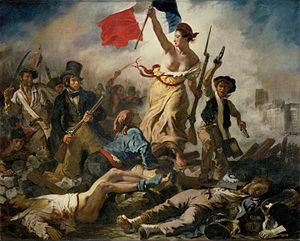
There was a time when a painting could make or break a government. It could serve as propaganda for a political movement. In 1830 Liberty leading the people by Eugène Delacroix promoted the republican cause:-
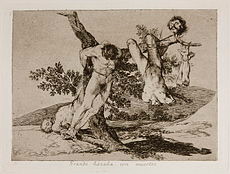
Or it could express defiance in the face of an unwanted establishment. I know of no more shocking anti-war statement than Goya’s Disasters of War, which shows the barbarity of the conflict during the Spanish uprising against the French at the beginning of the 19th century:-
But those days are gone, aren’t they? Painting no longer has this power.
Or does it?
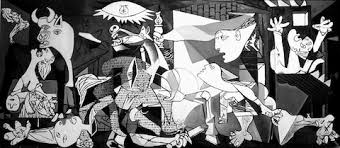
In February 2003 an American delegation to the United Nations was making its case for armed intervention in Iraq. The press conference following Colin Powell’s presentation to the Security Council was about to take place live on TV. Then someone noticed that on the wall, in full view of the cameras, was a large reproduction of Picasso’s Guernica, his powerful protest against the 1937 German/Italian bombing of a defenceless Basque town. Screaming women, dead babies, burning houses, suffering animals. So they covered it up. Who’d have thought it? The most powerful government in the world threatened by a painting. In the 21st century. Maybe those days are not gone after all.
 my chautauqua